The social structuring of the social and marriage
laws of the Aboriginal is very complex; to understand the complexity of the
structuring, non-Aboriginal must consider the three main aspects of division.
The first aspect to be considered is the physical
structuring which is determined by numbers; i.e. family, horde, and tribe. A
tribe may contain 500 people, which are made up of bands. Each band has 10 to
20 people each, their job is to hunt and gather food with one another each day.
Every separate band is called a horde, and each horde is compiled of several families.
The second aspect religious structuring which is
based on beliefs, customs, and marriage laws which are eventually divided by
these beliefs into moieties, sections, subsections, and clans. The Aborigines
are divided into two moieties which have been based on ancestral beings. Each
moiety has its significant places, animals, or plants which are considered
highly favored depending on the religious nature. Moieties can be divided into
sections and subsections.
The final aspect is kinship which includes the
social structuring. the kinship system allows every person in the Aboriginal society to have a relationship with one another. Kinship is valued because it lends a hand in behavior and obligations to one another; hence, it determines who is responsible for what and in tragic times, who becomes responsible over minors, debts, and misdeeds. Under Kinship laws, there are over 70 relationship terms. For instance, although I have just one father, I would call all over my fathers' brothers 'father' also; in turn, if they were to pass away and I were oldest, I would receive what they left in the world. However, it isn't that they are unknowing of their true father/son, mother/daughter, unlce.nephew relationships, it's just kinship law.
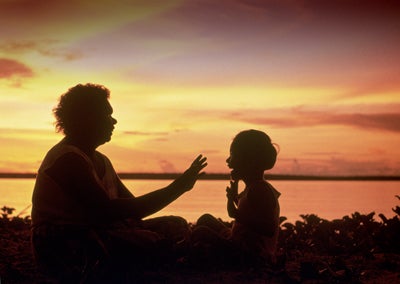
Smith, Heide
1996. Story Time. Electronic Document,
http://www.humanrights.gov.au/sites/default/files/content/bth/taken/images/Heide_Smith_sm.jpg, Accessed July 21.
Author Reflection
Reading through the articles describing the Aboriginal family and kinship structure was really a lot for me to take in. The article said at one point that it is not an easy concept for non-Aboriginal to grasp, and I must agree. After reading the structural explanation, I grew fond of the way they divided themselves and lived. I loved that nowhere do they mention just one family living alone, families live with families by similarities and location. I thought that this was amazing, because no family is ever truly by themselves and they don't have just themselves to rely on. It reminds me of the saying 'It takes a village to raise a child,' because everyone intermingled and there is some kind of relation between every person in the tribe; children don't have just two parents, they are literally being raised by everyone. I found that to be beautiful, it;s something you don't see in western society and I have much appreciation for this Aboriginal culture.
-Shernide Joseph

No comments:
Post a Comment